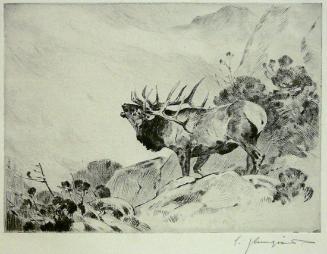
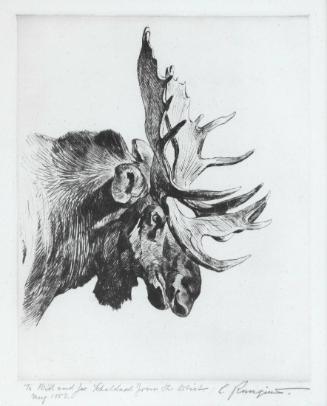
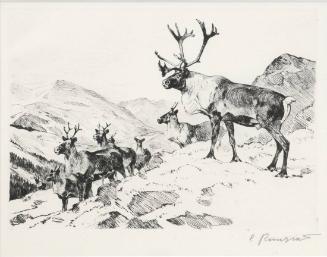
Above Timberline: Engravings by Carl Rungius
Drypoint Print Process
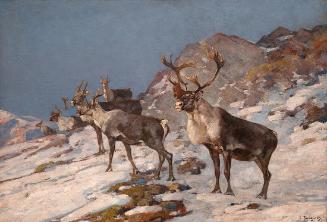
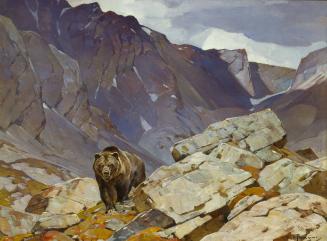
Generally, Rungius based his prints on paintings he had already completed, creating limited edition reproductions of some of his best work. In his existing paintings, he had already worked out the composition, lighting, anatomy, and design; key elements that made for aesthetically successful prints. Rungius traced the preliminary image from either the front of a black and white photograph of a painting or held the photograph up to the light and traced the back. He then transferred this image onto the printing plate.
Rungius used copper plates with a combination of two types of printing: etching and drypoint. He began with a copper plate covered in an acid resistant coating (called a “ground”). He drew on the plate with a sharp metal needle, scratching away the ground and exposing the underlying metal surface. After this, he submerged the plate in an acid bath. The acid ate away at the exposed metal lines, creating grooves or depressions in the surface. The depth of the lines was determined by the amount of time the plate remained in the acid.
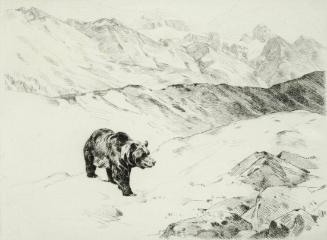
In addition to etching with acid, Rungius employed a drypoint needle, scratching directly into the metal plate. This drypoint technique produced the velvety lines for which his prints are known. After inking his plates and pulling a proof copy, Rungius would often go back for another round of etching with acid or scraping with drypoint until achieving his desired result. Combining the printing techniques gave Rungius the soft lines characteristic of drypoint in addition to the harder lines characteristic of etching. The many prints Rungius produced show his great compositional skill along with his strong design sensibility, all realized through his mastery of the printing process.
Above Timberline
Engravings by Carl Rungius
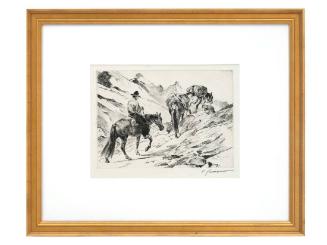
In 1925, Carl Rungius began experimenting with drypoint and etching techniques. Over the next 13 years, he produced a wide variety of different designs, most of which were based on his existing paintings. In total, he created 46 different editions and, in most cases, he limited print-runs to 100. He also created two special bookplates for collectors Robert L. Knight and William Nicholas Beach.
During the initial three years of his print production, he created 26 different designs. The best-seller was An Old Fighter, which sold 105 copies. With the onset of the Great Depression in 1929, Rungius’s sales suffered and he stopped making new prints until 1931. Sales after 1931 reflected the tenor of the times, with average sales ranging between five and 20 from an edition versus the 50 and up he averaged pre-depression.
The years of Rungius’s print production coincide with his peak period as an artist. At the time, they were relatively affordable additions to the artist’s oeuvre. Today, they are highly sought after by collectors. The exhibition Above Timberline: Engravings by Carl Rungius represents a rare opportunity to see each print in one gallery, which offers the chance to compare stylistic variations across time and get a full sense of Rungius’s remarkable achievement in printmaking.