Skip to main content
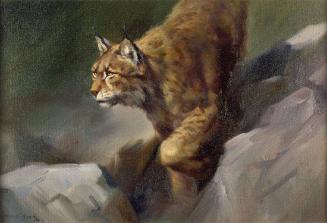
Bateman's artistic path wound through several movements before he settled on the style that would come to define his career. He began as a representational painter, moved through impressionism and cubism, and by the early 1960s had turned to abstract expressionism. In his early 30s, inspired by the work of Andrew Wyeth, he returned to realism, finding it the most faithful way to express the particularity of the natural world. That fusion of photorealistic precision and dynamic composition, capturing both the exact textures of the wild and his own conservationist convictions, became his signature.
Bateman left teaching in 1976 to paint full-time and has since traveled to remote areas around the world with his wife, artist and conservationist Birgit Bateman. In 1985, they settled on Salt Spring Island, British Columbia, where he still lives and paints today. Bateman’s work began earning serious critical acclaim in the 1970s and early '80s. Today, his paintings hang in museums and collections across the globe, including the National Museum of Wildlife Art. Bateman has been the feature of solo museum exhibitions throughout North America, among them a show at the Smithsonian Institution, a retrospective that toured Canada and the United States for two years, and a solo exhibition that traveled to four cities in Russia.
Since the early 1960s, Bateman has thrown himself into naturalist and conservation organizations, now working on a global scale. He has become an outspoken voice for environmental and preservation issues, channeling his artwork and limited-edition prints into fundraising efforts that have generated millions of dollars for these causes. His honors are extensive, including Officer of the Order of Canada and more than a dozen honorary doctorates; three schools bear his name in recognition of his contributions to art, education, and conservation.
Many of Bateman's early works are on permanent display at The Robert Bateman Centre on Victoria's Inner Harbor, where visitors can explore the ideas and philosophy behind his art. Through his painting, writing, and public speaking, he remains one of the most recognized voices calling for a renewed, thoughtful relationship with the natural world. "I can't conceive of anything being more varied and rich and handsome than the planet Earth," Bateman says. "Its crowning beauty is the natural world. I want to soak it up, to understand it as well as I can, and to absorb it. And then I'd like to put it together and express it in my painting."



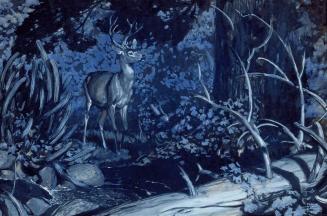
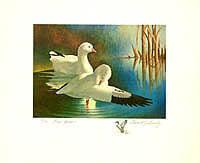
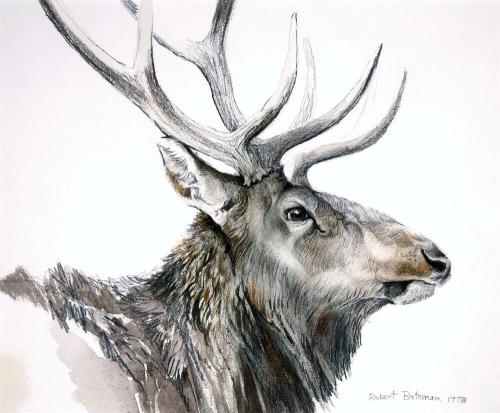
Robert Bateman
Canada, born 1930
Place of BirthCanada
Biography A painter, naturalist, and conservationist, Robert Bateman ranks among the world's most celebrated contemporary wildlife artists. Born in Toronto in 1930, he was drawn to the wilderness as a child and deepened that connection while working at a wildlife research camp in Ontario's Algonquin Park. He earned a degree in geography from the University of Toronto and went on to teach high school for 20 years—including two years in Nigeria—painting wildlife and nature in his free time, all the while.Bateman's artistic path wound through several movements before he settled on the style that would come to define his career. He began as a representational painter, moved through impressionism and cubism, and by the early 1960s had turned to abstract expressionism. In his early 30s, inspired by the work of Andrew Wyeth, he returned to realism, finding it the most faithful way to express the particularity of the natural world. That fusion of photorealistic precision and dynamic composition, capturing both the exact textures of the wild and his own conservationist convictions, became his signature.
Bateman left teaching in 1976 to paint full-time and has since traveled to remote areas around the world with his wife, artist and conservationist Birgit Bateman. In 1985, they settled on Salt Spring Island, British Columbia, where he still lives and paints today. Bateman’s work began earning serious critical acclaim in the 1970s and early '80s. Today, his paintings hang in museums and collections across the globe, including the National Museum of Wildlife Art. Bateman has been the feature of solo museum exhibitions throughout North America, among them a show at the Smithsonian Institution, a retrospective that toured Canada and the United States for two years, and a solo exhibition that traveled to four cities in Russia.
Since the early 1960s, Bateman has thrown himself into naturalist and conservation organizations, now working on a global scale. He has become an outspoken voice for environmental and preservation issues, channeling his artwork and limited-edition prints into fundraising efforts that have generated millions of dollars for these causes. His honors are extensive, including Officer of the Order of Canada and more than a dozen honorary doctorates; three schools bear his name in recognition of his contributions to art, education, and conservation.
Many of Bateman's early works are on permanent display at The Robert Bateman Centre on Victoria's Inner Harbor, where visitors can explore the ideas and philosophy behind his art. Through his painting, writing, and public speaking, he remains one of the most recognized voices calling for a renewed, thoughtful relationship with the natural world. "I can't conceive of anything being more varied and rich and handsome than the planet Earth," Bateman says. "Its crowning beauty is the natural world. I want to soak it up, to understand it as well as I can, and to absorb it. And then I'd like to put it together and express it in my painting."
Person TypeIndividual
Terms
